
Losing a tooth can be a stressful experience, affecting not only your smile but also your oral health and overall confidence. Fortunately, modern dentistry offers multiple solutions to restore missing teeth, with dental implants and dental bridges being the two most popular options. Choosing between them requires understanding their procedures, benefits, risks, costs, and long-term outcomes.
Understanding Tooth Loss
Before diving into replacement options, it’s essential to understand the implications of tooth loss. Missing teeth can lead to:
- Shifting of adjacent teeth
- Bite misalignment and jaw pain
- Bone loss in the jaw
- Difficulty chewing and speaking
- Changes in facial structure
Addressing tooth loss promptly can prevent these complications and maintain both function and aesthetics.
What is a Dental Implant?
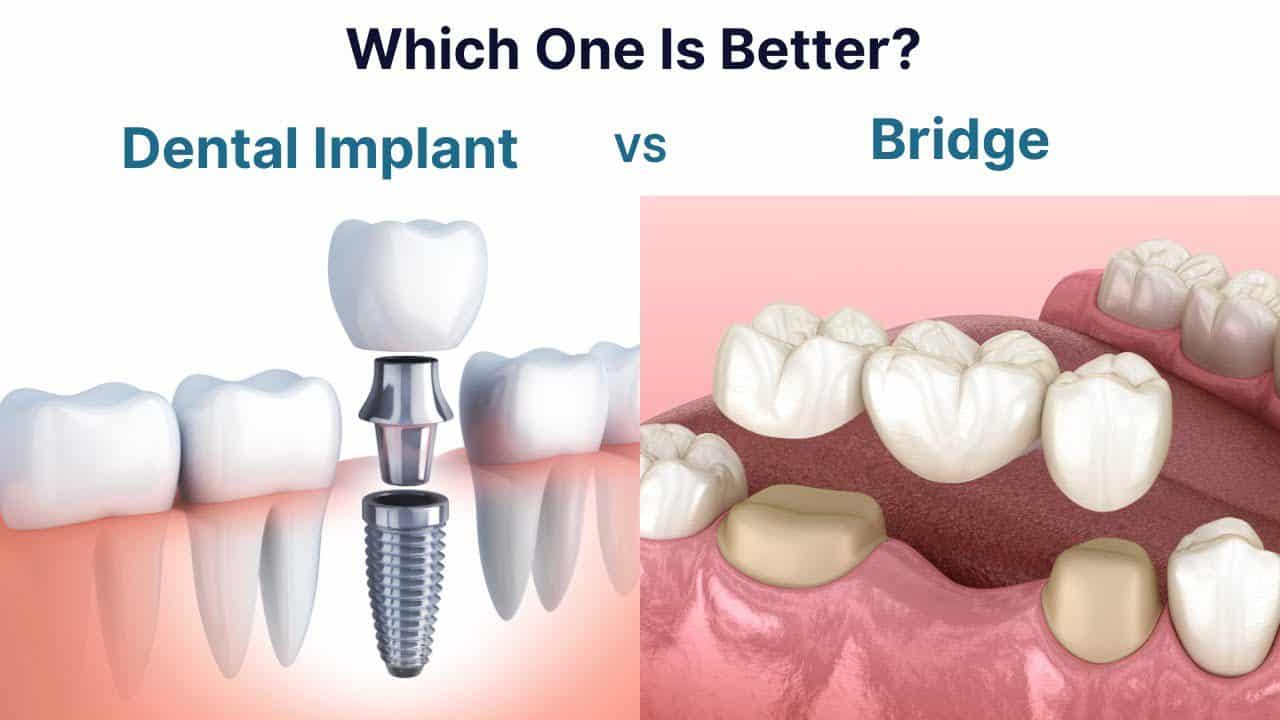
A dental implant is a permanent tooth replacement solution. It consists of three main components:
- Implant post: A titanium screw inserted into the jawbone, acting as the tooth root.
- Abutment: Connects the implant post to the crown.
- Crown: The visible part of the tooth, designed to match your natural teeth.
The implant integrates with the jawbone through a process called osseointegration, providing a stable and durable foundation. Learn more about how implants work on Want Teeth – How Dental Implants Work.
Procedure for Getting a Dental Implant
The process involves several steps, usually spread over a few months:
- Consultation and evaluation: X-rays and 3D scans assess bone density and oral health. Book your consultation here.
- Implant placement: The titanium post is surgically inserted into the jawbone. Read about the surgical process here.
- Healing period: Osseointegration typically takes 3-6 months.
- Abutment placement: The abutment is attached once the implant is stable.
- Crown placement: The custom crown is fitted and secured.
Benefits of Dental Implants
- Long-lasting and durable, often lasting 20+ years
- Preserves jawbone and prevents bone loss
- Does not affect adjacent teeth
- Restores natural function and aesthetics
- High success rate, often above 95%
Discover why dental implants are considered an investment in yourself on Want Teeth.
Considerations and Risks
- Higher initial cost compared to bridges
- Requires sufficient bone density for placement
- Longer treatment timeline
- Potential complications: infection, implant failure, or nerve damage
What is a Dental Bridge?
A dental bridge is a restoration that replaces missing teeth by anchoring an artificial tooth (or teeth) to the adjacent natural teeth. Bridges are fixed prosthetics that can be made from materials like porcelain, ceramic, or metal.
Types of Dental Bridges
- Traditional bridge: Supported by crowns on adjacent teeth.
- Cantilever bridge: Anchored on only one side (used when adjacent tooth is present on one side).
- Maryland bridge: Uses metal or porcelain wings bonded to adjacent teeth, requiring minimal enamel removal.
- Implant-supported bridge: Combines dental implants with bridgework for multiple missing teeth. Learn more here.
Procedure for Getting a Dental Bridge
- Preparation: Adjacent teeth are reshaped to hold crowns.
- Impression: Mold of teeth is taken for bridge fabrication.
- Temporary bridge: Placed while permanent bridge is made.
- Placement: Permanent bridge is cemented onto prepared teeth.
Benefits of Dental Bridges
- Shorter treatment time than implants
- Lower upfront cost
- Non-surgical procedure in most cases
- Restores chewing function and aesthetics
Considerations and Risks
- Requires alteration of healthy adjacent teeth
- Does not prevent jawbone loss in the missing tooth area
- May need replacement every 10-15 years
- Risk of decay in supporting teeth if oral hygiene is poor
Comparing Implants and Bridges
Choosing between an implant and a bridge involves multiple factors:
1. Longevity and Durability
Dental implants generally last longer than bridges. With proper care, implants can last decades, while bridges may need replacement every 10-15 years.
2. Impact on Adjacent Teeth
Bridges require grinding down adjacent healthy teeth, whereas implants preserve surrounding teeth integrity.
3. Bone Preservation
Implants stimulate the jawbone and prevent bone loss. Bridges do not, which may lead to changes in facial structure over time. For more information, check this comparison.
4. Treatment Timeline
Bridges can typically be completed in 1-3 weeks, while implants may require 3-6 months due to healing and osseointegration.
5. Cost
While bridges have a lower initial cost, implants may be more cost-effective long-term due to durability and fewer replacements.
6. Aesthetic Considerations
Implants often look and feel more natural, as they mimic the tooth’s root and crown structure. Bridges are also natural-looking but may show slight differences in gum contour over time.
Maintaining Your Tooth Replacement
Regardless of the choice, proper care is essential:
- Brush twice daily with fluoride toothpaste
- Floss or use interdental brushes to clean around implants or bridges
- Attend regular dental check-ups and professional cleanings
- Avoid habits that may damage teeth, like nail-biting or chewing hard objects
Note: Only a qualified dentist can determine whether an implant or bridge is suitable based on individual oral health, bone structure, and personal preferences. Learn more about the clinic on Want Teeth – About Us.
Conclusion
Choosing between a dental implant and a bridge depends on several factors, including long-term durability, impact on surrounding teeth, bone preservation, treatment timeline, and budget. Dental implants offer a permanent solution that preserves bone and function, while bridges provide a quicker, cost-effective alternative. Consulting with a dental professional is crucial to make an informed decision and restore your smile with confidence.
For anyone considering tooth replacement, understanding the advantages and limitations of both options ensures a choice that fits both lifestyle and oral health needs. Investing in the right solution today can preserve your smile and prevent complications for years to come.