
The Tooth Replacement Showdown
Losing a tooth—or several teeth—can feel like a crisis for your smile, your confidence, and even your daily life. Fortunately, modern dentistry gives you options. The three most common solutions are dental implants, bridges, and dentures. Each has its own advantages, limitations, and ideal candidates. But if we’re looking at the ultimate combination of comfort, durability, aesthetics, and long-term oral health, one clearly comes out on top. Let’s break down the details to see how these tooth replacement methods stack up.
Dentures: The Classic Option
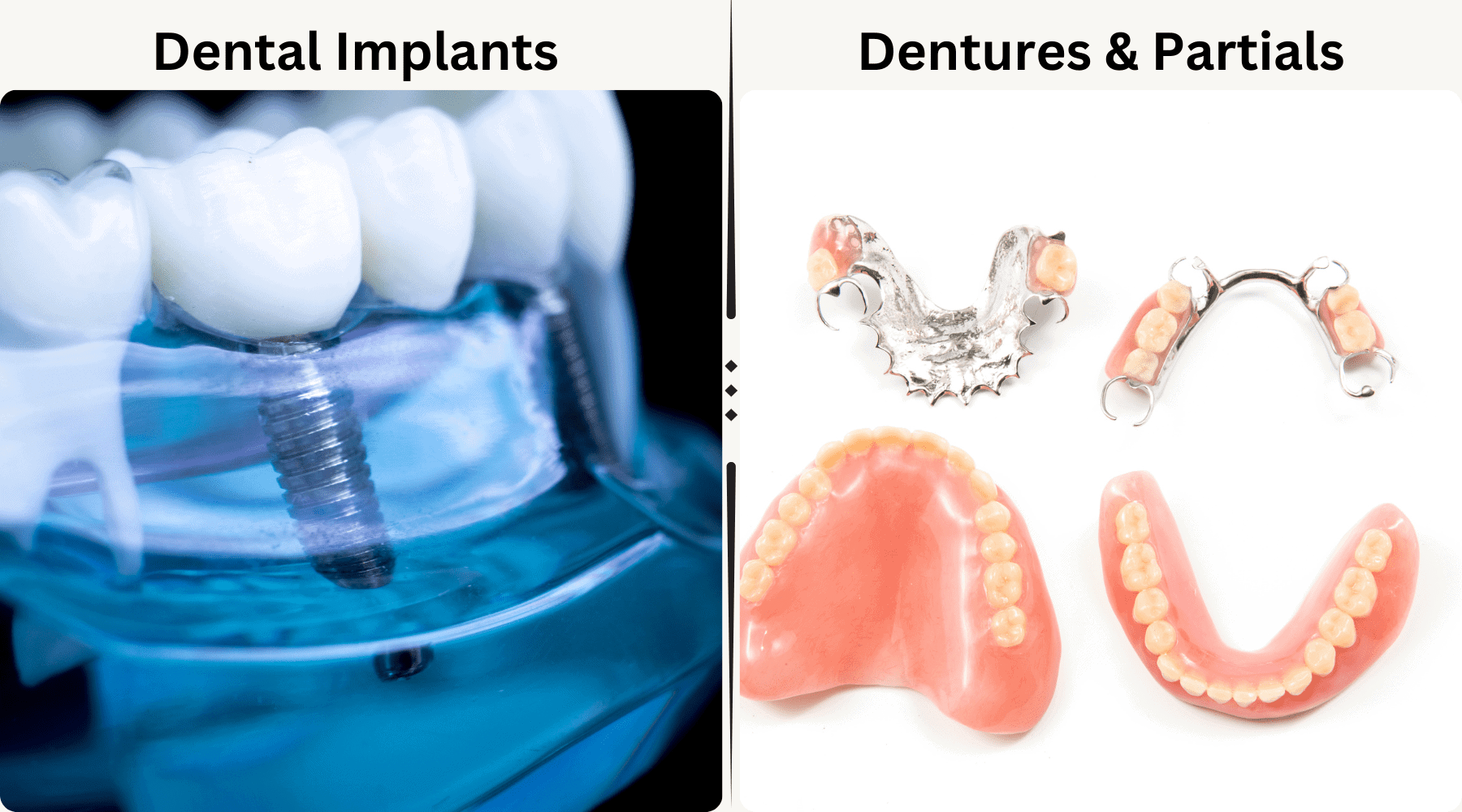
Dentures are the oldest and most widely recognized solution for missing teeth. They come in two main types: full dentures, which replace an entire arch, and partial dentures, which replace a few teeth. Dentures are removable and usually made of acrylic or a combination of acrylic and metal. They are often the go-to option for patients seeking an affordable solution, and they can be fitted relatively quickly. However, while dentures restore basic function and appearance, they come with several drawbacks. They can slip or shift in the mouth, making eating and speaking challenging. Adhesives may be needed, and some foods—like sticky or hard items—can feel nearly impossible to enjoy. Over time, dentures can accelerate jawbone loss because they don’t replace the tooth root, causing a sunken facial appearance and potential changes in bite alignment. In short, dentures solve the immediate problem of missing teeth but do little to preserve the long-term health and structure of the mouth.
Dental Bridges: A Step Up
Dental bridges are a fixed solution that spans the gap created by one or more missing teeth. Traditional bridges attach to neighboring teeth, which are reshaped to support the prosthetic tooth (or teeth). Bridges offer several advantages over dentures: they are non-removable, restore chewing function better, and generally feel more stable in the mouth. A bridge can also look quite natural when properly designed and colored to match surrounding teeth. However, there are significant trade-offs. The teeth adjacent to the gap must be altered, which permanently affects healthy tooth structure. Bridges also do not replace the tooth root, so bone loss in the jaw can still occur over time. Additionally, bridges can be more difficult to clean, increasing the risk of decay and gum disease around supporting teeth. While bridges are a good intermediate solution, especially for those who are not candidates for implants, they lack the long-term durability and health benefits of a true root replacement.
Dental Implants: The Modern Marvel
Dental implants have revolutionized tooth replacement by addressing the limitations of both dentures and bridges. Implants consist of a titanium post placed directly into the jawbone, mimicking the root of a natural tooth. Once the implant fuses with the bone—a process called osseointegration—a crown, bridge, or even a full-arch prosthetic can be attached. This root-level replacement preserves jawbone density, preventing the sunken look often seen in long-term denture wearers. Implants are fixed and stable, allowing patients to bite, chew, and speak just like with natural teeth. They do not require altering neighboring teeth, protecting the rest of your smile. From an aesthetic standpoint, implants can be virtually indistinguishable from real teeth, providing a natural, confident smile. Implants also outshine other options in longevity: with proper care, they can last decades, often for a lifetime, whereas bridges and dentures usually require replacement or repair every 5–15 years. In almost every category—function, appearance, oral health, and durability—implants outperform both bridges and dentures.
Comfort and Stability Comparison
When it comes to comfort, there’s no contest. Dentures often move and require adhesives to stay in place, making everyday activities like eating and speaking a challenge. Bridges are fixed and more stable, but they can put stress on neighboring teeth, potentially causing discomfort or sensitivity. Dental implants provide unmatched comfort because they are anchored in the jawbone and feel like natural teeth. Patients can bite into any food without hesitation, speak without worrying about slipping, and forget they even had a dental procedure—this level of stability is unmatched by bridges or dentures.
Oral Health Implications
Replacing a tooth isn’t just about filling a gap; it’s about protecting your oral health. Dentures do not prevent bone loss, which can lead to a sunken facial appearance and changes in bite over time. Bridges protect the surrounding area by filling the gap but require the preparation of healthy teeth and still don’t prevent bone deterioration. Implants, however, preserve bone density and stimulate the jaw during chewing, which maintains facial structure. They also protect neighboring teeth since they stand independently, reducing the risk of future dental complications. From an oral health perspective, implants are the only option that truly works to maintain the mouth’s natural integrity long-term.
Aesthetics: Smiles That Impress
A great smile can make a huge difference in confidence and self-esteem. Dentures can restore teeth for a functional smile but may look artificial or bulky. Bridges are usually better in appearance and can be color-matched to your natural teeth, but the metal or crown support structures may sometimes be noticeable. Implants take aesthetics to the next level—they are designed to mimic natural teeth in color, shape, and proportion, and because they’re fixed in the bone, they maintain proper gum contours. The result is a smile that looks natural and permanent, which is why implants are often the choice of celebrities, professionals, and anyone looking to truly transform their appearance.
Durability and Lifespan
When comparing durability, dentures often come in last. They can wear down, crack, or warp over time and may need relining or replacement every few years. Bridges are more durable than dentures but generally last 10–15 years before requiring replacement. Dental implants are built to last decades and, with good care, can last a lifetime. Their titanium posts are highly resistant to decay, and their integration with the jawbone creates a long-lasting foundation that simply cannot be matched by dentures or bridges. In terms of long-term value, implants are a clear winner.
Cost Considerations
It’s no secret: dental implants are more expensive upfront compared to bridges or dentures. Dentures are the most affordable initial option, followed by bridges. However, cost is not the full picture. Dentures and bridges may require replacement, repairs, or adjustments every few years, which can add up. Implants, though pricier at first, are a long-term investment that can save money in future dental costs. Considering their benefits in oral health, function, aesthetics, and longevity, many patients find implants to be worth every penny.
Who Should Consider Each Option
Dentures may be appropriate for patients who need a quick, affordable solution or who are not candidates for surgery. Bridges can be ideal for patients with healthy neighboring teeth who want a fixed solution without surgery. Dental implants, however, are best for patients who want a permanent, durable, and natural-feeling solution and are willing to invest in long-term oral health. With modern dental techniques, even patients with some bone loss or other challenges can often receive implants, making them accessible to a wide range of people.
The Verdict: Who Wins?
When we compare dental implants, bridges, and dentures across comfort, stability, oral health, aesthetics, durability, and long-term value, dental implants take the crown. Dentures and bridges certainly have their place, especially for budget-conscious or temporary solutions, but implants offer unmatched benefits that make them the gold standard in modern dentistry. They restore function, protect bone, preserve natural teeth, and provide a smile that looks and feels completely natural. In every sense, dental implants are the ultimate champion for anyone serious about replacing missing teeth.
Final Thoughts
Missing teeth affect more than just appearance—they impact chewing, speaking, confidence, and oral health. Choosing the right replacement option is crucial, and while dentures and bridges provide temporary fixes, dental implants offer a permanent, life-changing solution. They are more than just teeth—they’re an investment in function, aesthetics, and long-term health. If you want a solution that restores your bite, protects your smile, and lets you eat, speak, and smile confidently for decades, dental implants are the clear winner.